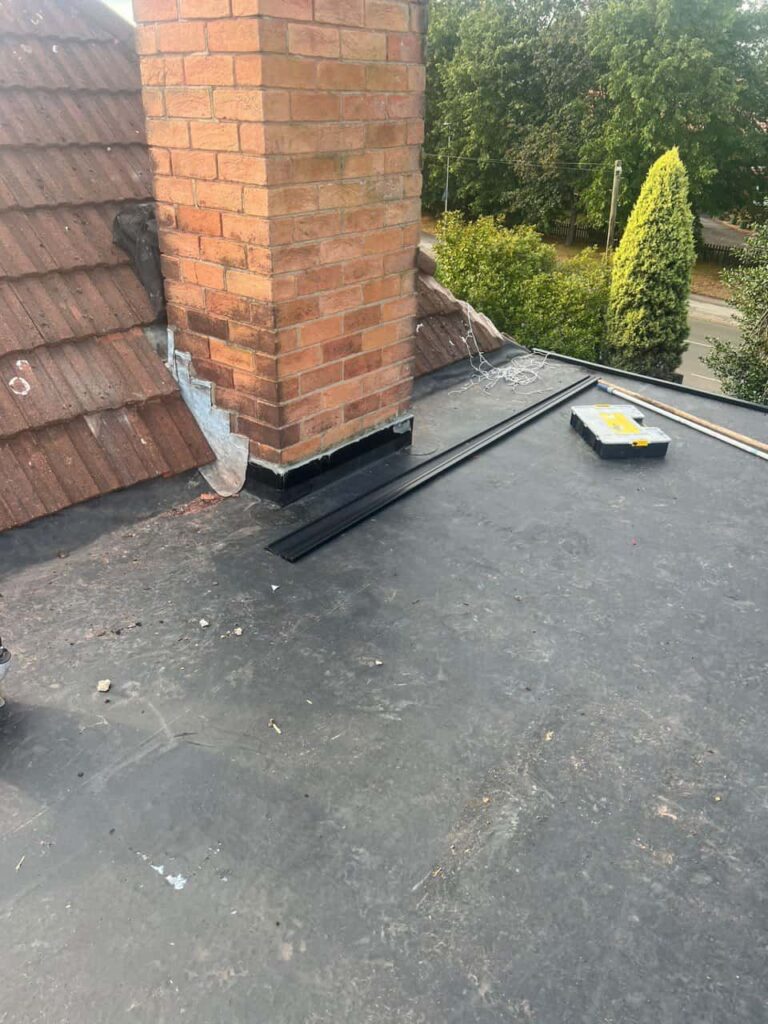
A roof leak can begin as a small problem but may become more disruptive if the source is not identified and repaired. Water can enter through damaged tiles, worn flashing, defective roof junctions or other vulnerable areas, sometimes travelling along the roof structure before becoming visible inside the property.
For homeowners in South Normanton, Derbyshire, recognising the warning signs and understanding the common causes of roof leaks can help ensure that suitable repairs are carried out before the problem develops further.
Common Causes of Roof Leaks
Roof leaks can occur for several reasons, and the visible damp patch inside the property does not always indicate where the water is entering.
Damaged or Missing Roof Tiles
Cracked, slipped or missing tiles can leave parts of the roof exposed to rainwater. Damage may occur through weather exposure, impact or general deterioration over time.
Replacing damaged tiles can often resolve the immediate problem, but the surrounding area should also be checked to ensure that there are no additional defects.
Defective Roof Flashing
Flashing is used around vulnerable areas such as roof junctions, chimneys and other points where different surfaces meet. If flashing becomes cracked, loose or deteriorated, water can find its way beneath the roof covering.
A professional repair should address the defective section and ensure that the surrounding area remains properly sealed.
Damaged Mortar
Mortar around ridge tiles, verges and other roof components can deteriorate over time. Cracks, gaps or loose sections may create routes for water to enter the roof.
Where mortar has failed, the affected area may need to be repaired or carefully renewed depending on its condition.
Blocked or Damaged Gutters
Gutters are designed to move rainwater away from the roof and building. When they become blocked or damaged, water can overflow and collect around roof edges.
Regularly clearing debris and checking gutters for damage can help prevent water from reaching areas where it can cause problems.
Problems Around Roof Junctions
Roof valleys, abutments and other junctions can be particularly vulnerable to water ingress. Defects in these areas may not always be obvious from ground level.
Because water can travel before appearing inside the property, investigating the complete route of the leak is important when carrying out repairs.
Signs You May Have a Roof Leak
A roof leak does not always produce an obvious stream of water. Homeowners should look out for:
- Damp patches on ceilings or walls
- Brown or discoloured marks
- Peeling paint or damaged plaster
- Damp smells in roof spaces
- Water appearing after rainfall
- Visible daylight through the roof covering
- Wet insulation or timber
- Dripping around roof windows or junctions
If these signs appear, identifying the source promptly can help prevent unnecessary damage to the surrounding roof structure.
How Are Roof Leaks Repaired?
The correct repair depends on the cause and extent of the problem. A professional assessment should begin by examining the roof covering and vulnerable areas where water may enter.
Repairs may involve replacing broken tiles, securing slipped materials, repairing flashing, renewing defective mortar or addressing problems with roof junctions and drainage.
Simply covering an internal damp patch without addressing the source is unlikely to provide a lasting solution. The priority should be finding where water is entering and correcting the underlying defect.
Why Professional Roof Leak Repairs Matter
Roof leaks can be difficult to trace because water does not always enter directly above the area where damage becomes visible. Professional roof inspections allow the roof covering, junctions, flashing and other potential entry points to be assessed systematically.
Appropriate repair techniques can also help avoid unnecessary disturbance to areas of the roof that remain in good condition. This is particularly important when the visible leak is caused by a relatively localised defect.
Preventing Future Roof Leaks
Although not every roof problem can be prevented, regular attention can help identify developing defects.
Useful measures include:
- Checking for slipped or damaged tiles
- Keeping gutters and outlets clear
- Monitoring flashing and mortar for deterioration
- Looking for signs of damp after periods of heavy rain
- Arranging a professional inspection when persistent problems appear
Early attention can make it easier to deal with isolated defects before they affect a larger section of the roof.
Roof Leak Repairs in South Normanton
For homeowners dealing with a leaking roof in South Normanton, Derbyshire, South Normanton Roofing Repairs provides professional roof repair services focused on identifying and resolving the cause of water ingress.
Whether the issue involves damaged tiles, flashing, mortar, roof junctions or another defect, a suitable repair should be based on the condition of the roof and the location of the problem.
Conclusion
Roof leaks can have a variety of causes, and locating the source is an important part of achieving an effective repair. Damaged tiles, defective flashing, deteriorating mortar, drainage problems and vulnerable roof junctions should all be considered when investigating water ingress.
If you have noticed signs of a roof leak in South Normanton, Derbyshire, contact South Normanton Roofing Repairs to discuss the problem and arrange a professional assessment of your roof.
Call us on: 01773 308 996
Click here to find out more about South Normanton Roofing Repairs
Click here to complete our contact form and see how we can help with your roofing needs.